Limited Edition vs Open Edition Prints: What You Actually Get
By Ning Ma
A limited edition print is one of a fixed number that will ever be made. Once they're sold, that image isn't printed again in that edition. An open edition has no cap. It's printed when someone orders it.
That's the whole definition. What matters is what each one is for.
How my editions work
Each limited edition is made in one size, 24 × 36 inches, on ChromaLuxe metal, in an edition of 20. Every print is hand-signed, numbered (5/20, say) and comes with a certificate of authenticity. The certificate records the title, edition number, print date, size and materials, and a unique certificate number. When all 20 are sold, the edition is closed.
Open editions are printed on Hahnemühle paper at 8.5 × 11 or 13 × 19 inches. They're signed and matted, and they arrive unframed. They aren't numbered, because there's no limit to count toward.
| Limited edition | Open edition | |
|---|---|---|
| How many | 20, then closed | No limit |
| Material | ChromaLuxe metal | Hahnemühle paper |
| Size | 24 × 36 in | 8.5 × 11 or 13 × 19 in |
| Signed | Yes | Yes |
| Numbered | Yes | No |
| Certificate | Yes | No |
| Framing | Float frame included | Matted, unframed |
| Price | $3,000 | $300 or $600 |
Why the limit matters, and when it doesn't
The cap is what gives a limited edition a chance of holding or gaining value. If 20 exist and people want them, the people who own them have something scarce. An open edition can't do that, however well it's printed.
Be honest about why you're buying, though. Most people buy photography to live with, not to resell. If that's you, the edition number is a nice detail. It isn't a reason on its own to spend ten times more. Buy the limited edition because you want the big metal print on your wall. Buy the open edition because you want the photograph and the smaller size suits you.
What to check with any seller
- Is the edition size the total, across every size? Some sellers run an edition of 50 in each of five sizes. That's 250 prints of one image. Mine is 20 in total, in one size.
- Are there artist's proofs outside the numbered run? Many artists keep a few. It's normal, but you should know.
- What's on the certificate? It should name the edition number, the materials and the size, and carry a signature and a unique number.
- Does a low number matter? Some collectors like to own 1/20. Nothing makes it more valuable than 14/20.
Looking after the certificate
Keep it somewhere other than the back of the print, like a folder or a fireproof box, and keep a scan. If the print is ever insured, damaged, sold or passed on, the certificate is what proves what it is. If you lose it, get in touch and I can verify the print against my records.

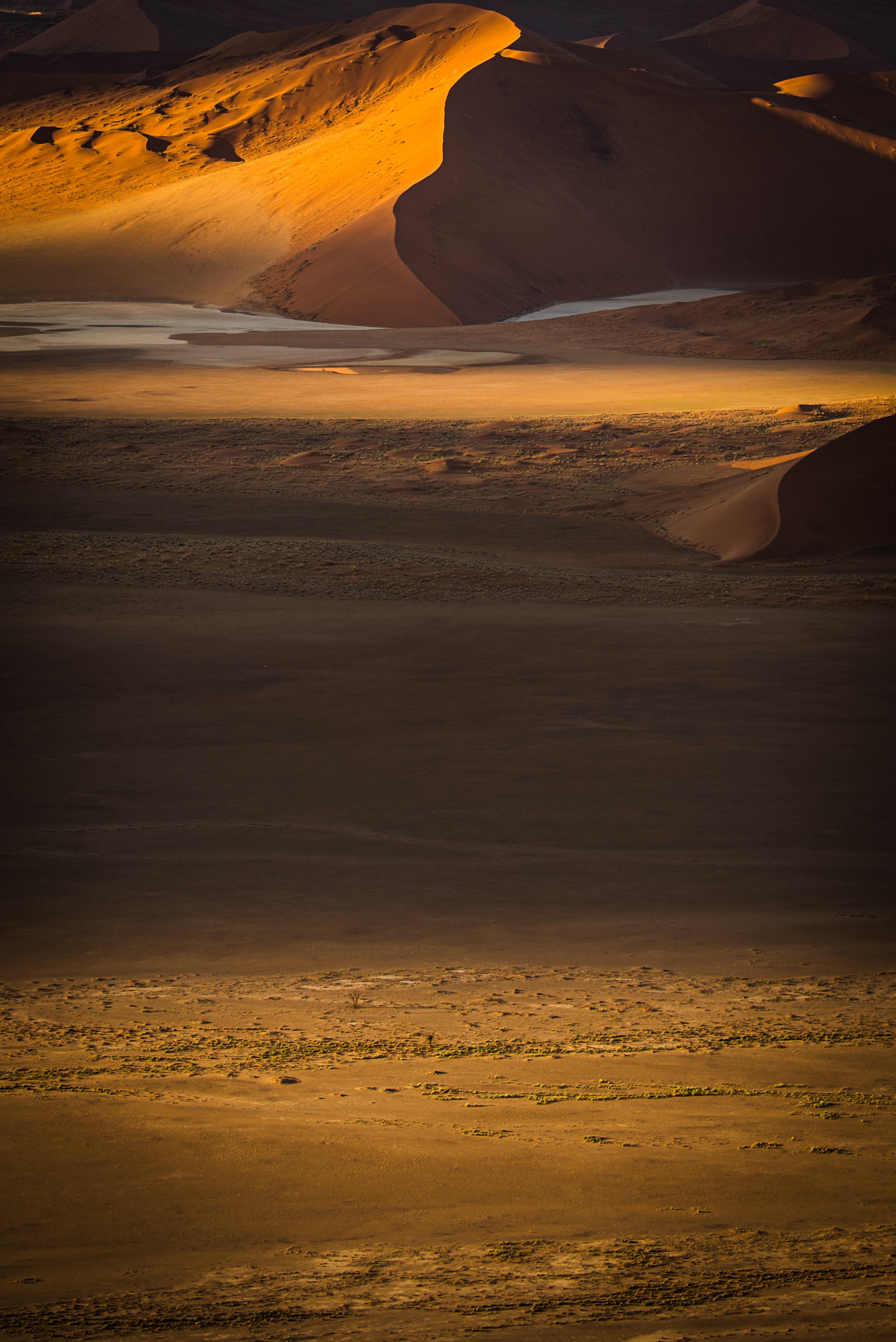
Queen's Gambit, Sossusvlei, Namibia.
For more on materials, see metal or paper. For the certificate itself, see certificate of authenticity.
Quick answers
- What does 5/20 mean on a print?
- It is print number 5 in an edition of 20. Twenty prints of that image will exist in that edition.
- Are limited edition prints a good investment?
- Sometimes, not reliably. Scarcity helps, and so does the artist's reputation over time. Buy something you want on your wall and treat any gain in value as a bonus.
- Are open edition prints signed?
- Mine are. Many open editions from other sellers are not, so ask.
- What is on a certificate of authenticity?
- The artist, title, edition number and edition size, print date, materials and dimensions, a signature and a unique certificate number.